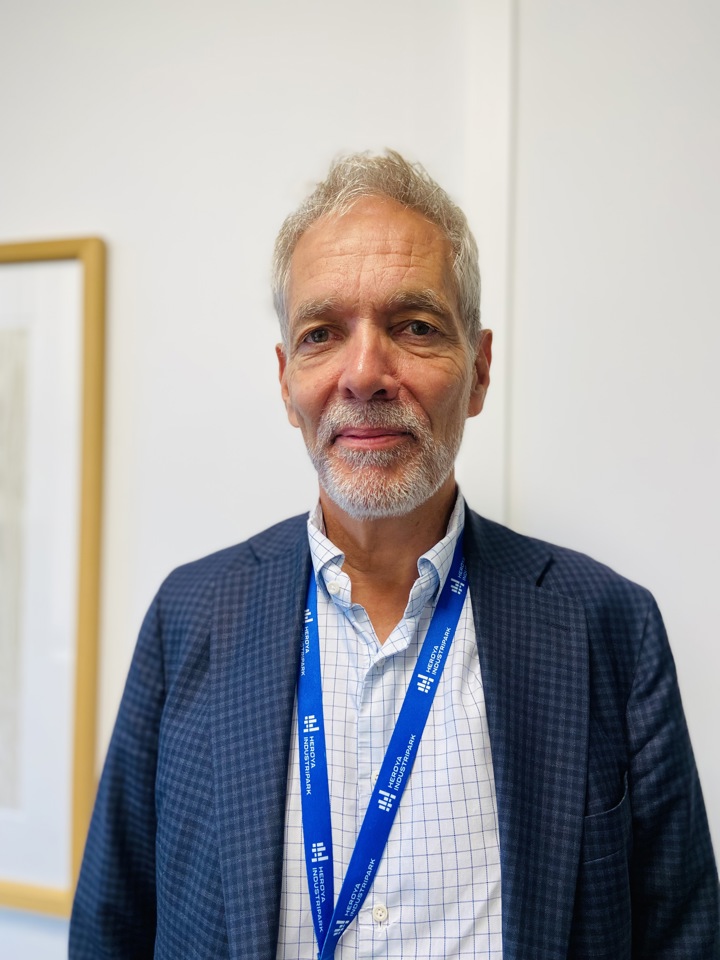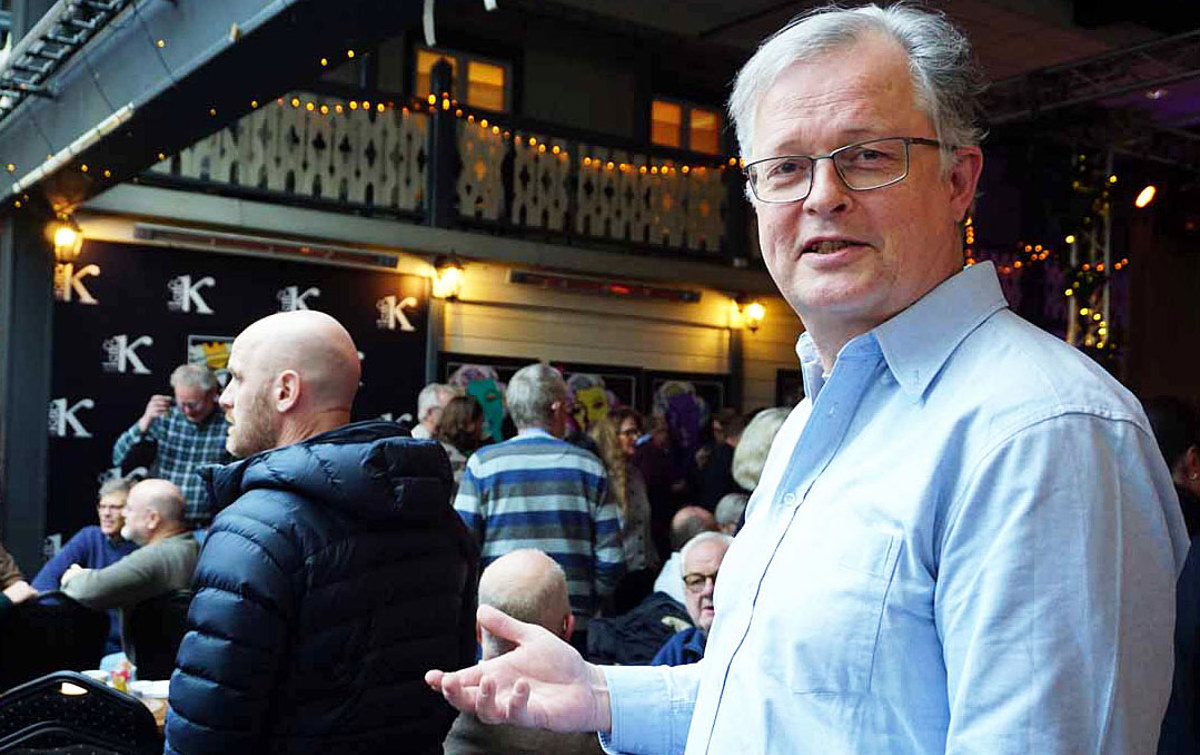
Environmental adviser and investor Bård Bergfald believes Telemark is now facing an opportunity bigger than the Norwegian oil adventure.
“We can carry out the energy transition away from the oil industry with a single facility,” he says.
He is referring to the rare earth discoveries at the Fensfeltet deposit in the municipality of Nome.
Change the world – capture the market
The environmental adviser and investor from Skien learned early on, back in his Bellona days, that if you want to change the world, you have to capture the market.
“It’s no good handing out buns and running campaigns to get people to stop driving fossil-fuel cars. You have to offer a product that’s better and cheaper. When we at Bellona, together with Morten Harket from a-ha, imported Norway’s first electric car, a LAREL, we were laughed at. Later the BBC credited us with inspiring the Norwegian electric car revolution,” he says.
Read (Norwegian only) https://elbil.no/far-aeren-for-a-ha-inspirert-elbil-revolusjonen/
Now he sees exactly the same pattern repeating itself – only on a much larger scale.
“We’re moving out of the carbon age and into the metal age. The world is at the start of a huge megatrend where renewable energy and nuclear power replace fossil fuels.”
And the fuel in this new world? Metals.
Enough metal for all the world’s cars
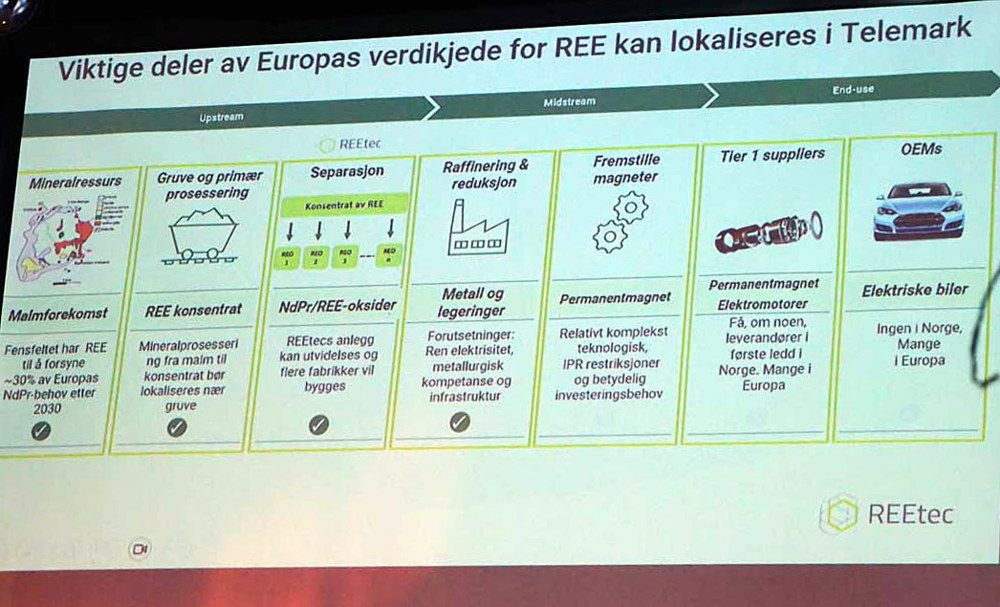
In the municipality of Nome lies Fensfeltet, a rare earth deposit that makes people sit up and take notice. Surveys carried out by Rare Earth Norway (REN) of the upper 500 metres indicate there is enough neodymium in the field to make every car in the world electric.
“This is the scale we need to take on board,” says Bergfald.
“We’re talking about a business that could take the market from the entire oil industry. Metal-based industry will replace fossil-based industry. It will cause enormous disruption for some, but for Grenland and Telemark it means industrial opportunities we’ve hardly seen the like of.”
Read press release from Rare Earths Norway 3rd March 2026:
Building the future at Herøya
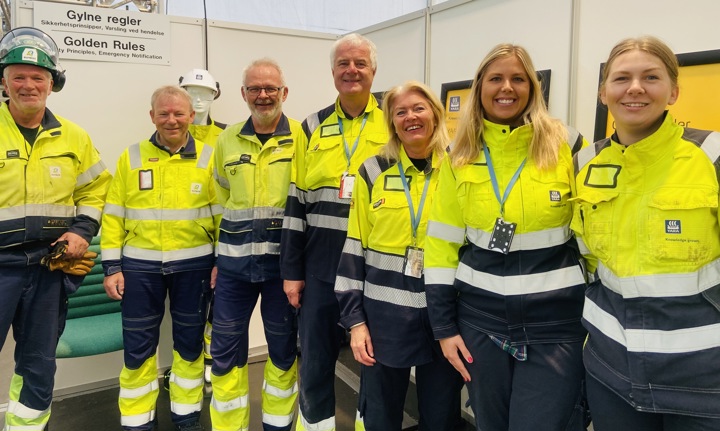
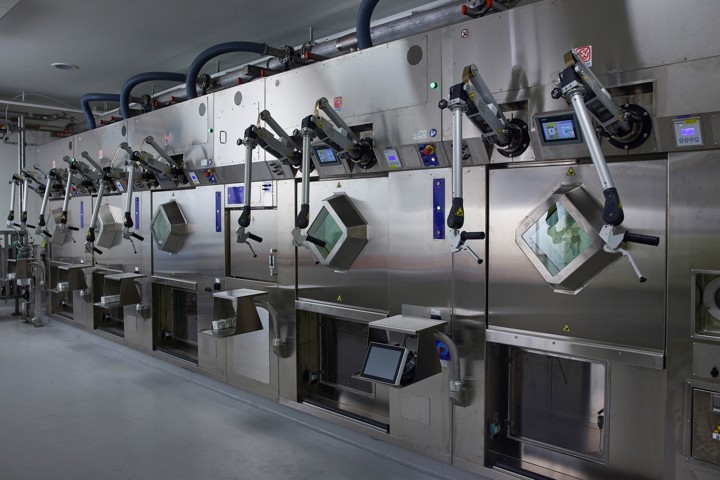
While politicians discuss framework conditions, factories are already rising at Herøya. Billions are now being invested here in metal-based industry.
- REEtec separates rare earth elements using a unique Norwegian technology that outperforms traditional methods both in speed and environmental impact.
- Thor Medical will produce breakthrough cancer therapy based on thorium – a by-product from Fensfeltet itself. Thor Medical is building its first commercial plant, “AlphaOne”, at Herøya, expected to be operational in 2026.
From a thorium dream to a magnet success
Bergfald’s involvement in today’s industrial adventure at Herøya began with a meeting with REC founder Alf Bjørseth. Bergfald had discovered the huge thorium deposits at Ulefoss and believed thorium-based nuclear power was the future. Bjørseth immediately liked the idea.
“After 20 minutes Alf said: ‘Bård, let’s start a company around this.’ We set up Thor Energy and secured the mineral rights at Fensfeltet,” Bergfald says.
When they began exploring the thorium, they discovered something else: the mineral was embedded in rare earth elements – precisely the metals the world needs to make the magnets used in electric vehicle motors.
That became the starting point for REEtec and later the sister company Thor Medical, both of which have built – and are building – plants worth billions at Herøya.
“We started out looking for thorium for nuclear power, but then discovered the thorium was embedded in the metals the world is crying out for to make EV magnets. That’s when we established REEtec, and it has become a tremendous success,” Bergfald says.
“Norway is gambling with the future”
Bergfald is known for speaking plainly, and he doesn’t hold back when talking about government priorities. He believes Norway is gambling with its future by investing hundreds of billions in new oil fields while the world undergoes an electric revolution.
“The Norwegian state spends NOK 270 billion a year developing new oil fields. At the same time there’s a global boom in electric vehicle sales, and oil demand is under threat. Imagine what mainland industry in Telemark could achieve in innovation if it had access to even a fraction of that money.”
He points to China, which already controls more than 60 per cent of the electric car market.
“The Chinese are rational. They don’t just sell raw materials – they sell finished cars. Here in Telemark we need to build the whole value chain, from extraction at Ulefoss to finished products at Herøya.”
The window of opportunity is now
When will this happen? According to Bergfald it is purely a question of capital and political will. Fensfeltet could be operational within five years if the resources are mobilised now.
“We can’t sit around waiting for the government to come trailing behind. We need to think both short-term and long-term at the same time. Yes, it takes time to build mines and nuclear reactors, but once they are in place they produce value and electricity for a hundred years.”
“We are at the beginning of an industrial revolution moving away from fossil carbon and towards metals. Telemark has the expertise, the resources and the space. Now we need to capture the market.”
Cheering for Nordic cooperation
Bergfald also looks towards Norway’s neighbours to the east. When he became involved in the Syd-Varanger mine in Kirkenes, he had to bring in both capital and expertise from Sweden. The same happened with REEtec, which was ultimately fully financed by Swedish investors.
“Swedes and Finns are world-class when it comes to mining and technical infrastructure. Now that the whole Nordic region is united in NATO, cooperation has taken on a completely new significance. We need to tap into their expertise to speed things up in Telemark,” concludes the patriot from Skien.
Text/photo: Siri Krohn-Fagervoll siri@krohnfagervoll.no